Each year we’re blessed with a nesting pair of Killdeers. Killdeers (Charadrius vociferus) are named for their distinctive “kill-deer” call. Vociferus, as you might guess, is Latin for “shouting” or “yelling.” Killdeer are definitely noisy birds!
Nesting in plots and on paths
Nesting can start as early as late March and into late May. At Lakeside, we’ve had babies hatch anytime between early to late June.
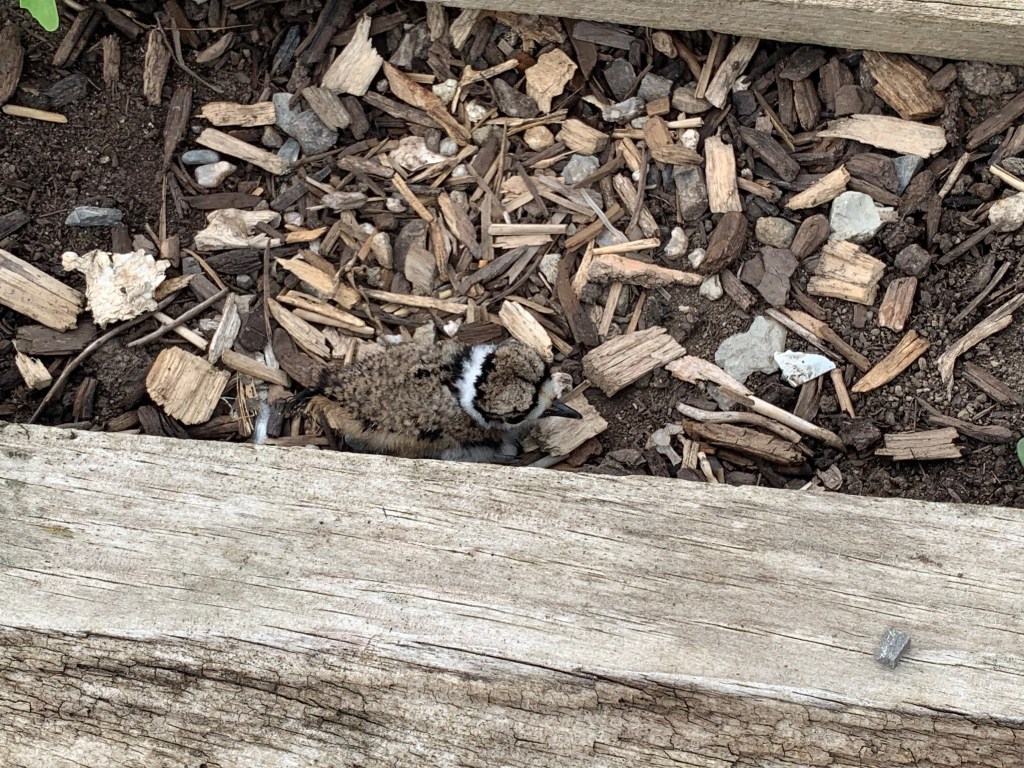
It usually takes us a while to locate the nests as the birds (and the eggs) are well camouflaged. Sometimes they nest in the middle of a wood chip path. Often they nest in plots. In 2023, well before planting, a pair nested between these boards. To make a nest, the male simply scrapes the ground to make a slight depression. The female then lays her eggs.
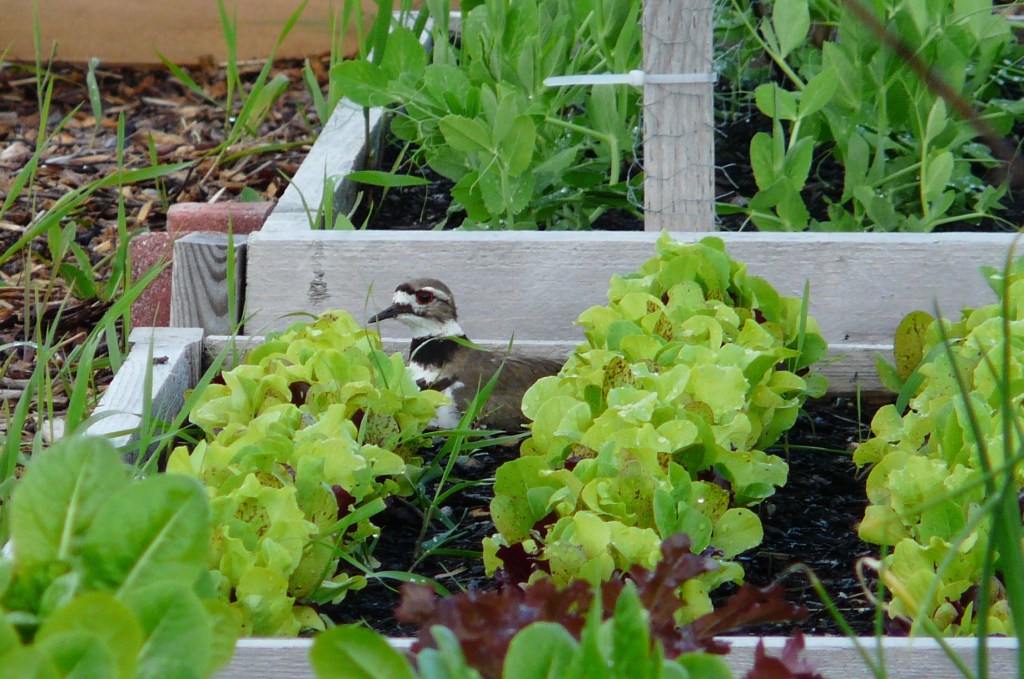
In 2022, a pair nested between rows of lettuce.
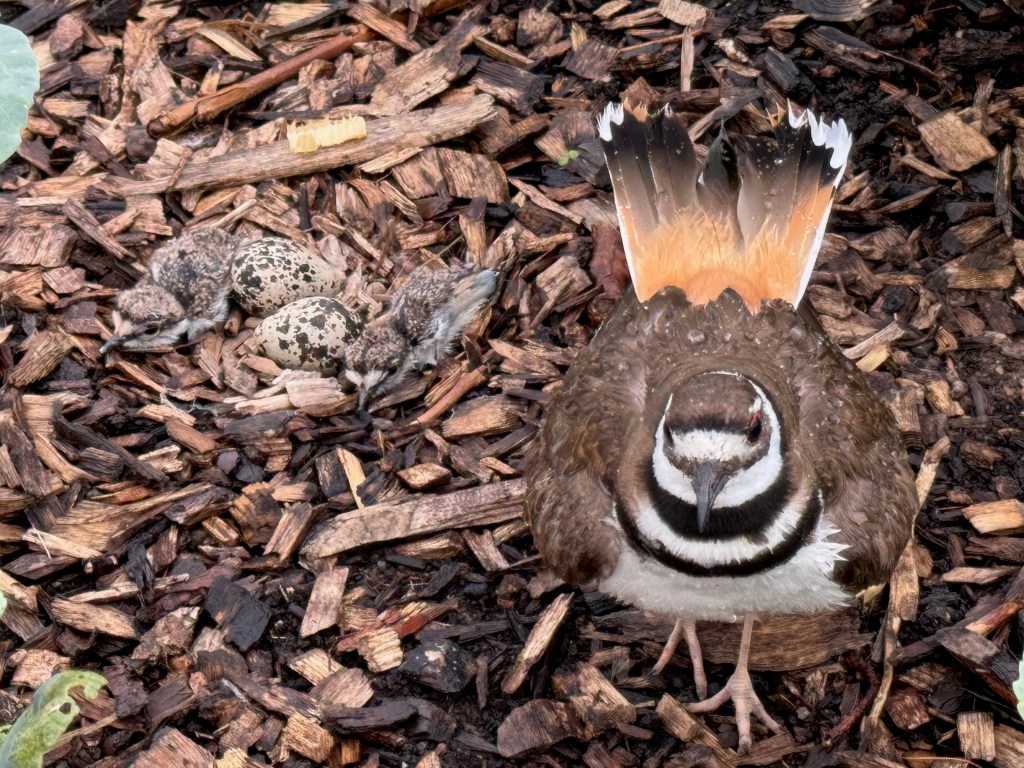
In 2024, we had several pairs attempt to nest, though only the pair in the Marian Donation Garden succeeded. Look closely and you’ll see two newly hatched chicks but no eggshells as the parents immediately remove the eggshells to help protect newly-hatched chicks from predators. The following day, these chicks had already left the nest. Since these chicks hatched on June 22, it may have been a second attempt.
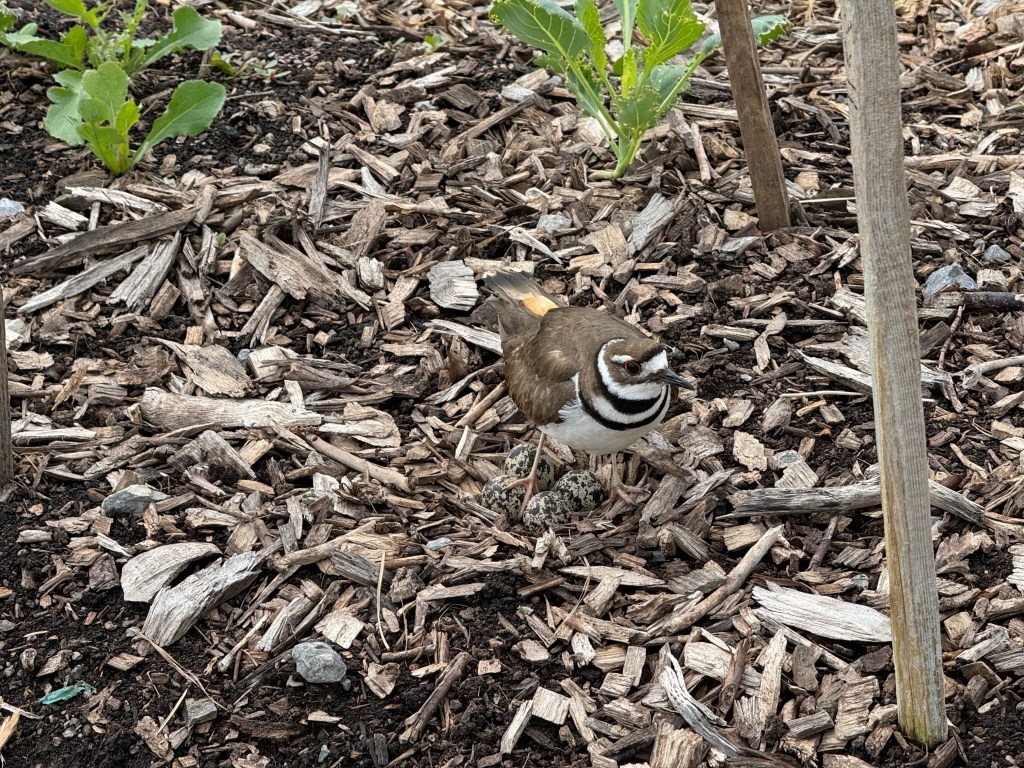
If a pair nests on a path, we mark the nest with a flag and close the path. If a pair nests in a plot, the gardener can carefully work around the nest for the 24-26 days it takes for incubation. Both parents take turns incubating and very hot days they may stand over the nest to shade the eggs. Once they hatch, the chicks leave the nest as soon as their down is dry and begin foraging for food. The parents stay with the chicks for about a month until they’re able to fly, guarding them from predators, warning of danger and brooding them at night or in bad weather.
Eating insects and invertebrates
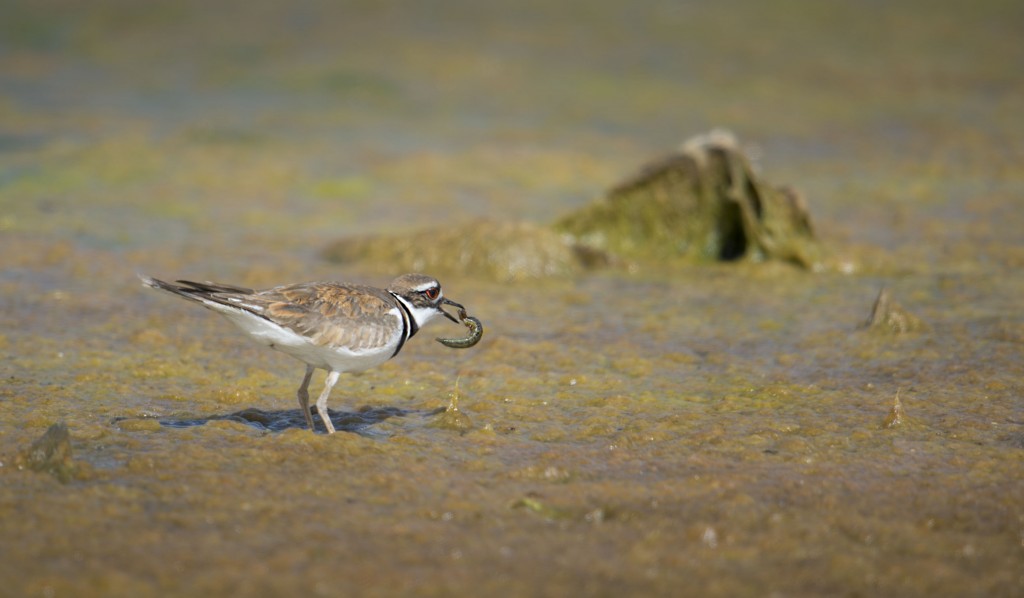
Killdeers are ground foraging insectivores, helping to control insect populations harmful to our our fruit and vegetable crops, including June Beetle larvae, Wire-Worms (the larvae of Click Beetles), Carpophilus Beetles and Weevils. They also eat Grasshoppers, Caterpillars, Ants, Caddisflies, Dragon Flies, True Flies, Centipedes, Spiders, Ticks, Earthworms and Snails.
Defending their nests
“First she [or he] . . . flounders . . . across the ground, screaming. . . . But if you . . . follow, the bird gradually recovers . . . to patter along ahead . . . with . . . celerity. The [mate] is no indifferent spectator. He comes as near as he dares, and shrieks, ‘Dear, dear, dear, dear, dear,’ . . . [N]eighbors add their frenzy to the din. . . . If you are willing to quit the place[,] a bevy of [Killdeer] . . . will pilot you out of bounds. One will patter ahead of you with breast pushed forward and legs incredibly nimble, only to pull up presently with a jerk and a compensatory bob [as if] to ask if you are following. [O]thers describe a great half-circle about you with graceful wing but unceasing stridor. . . . The birds . . . lead you off by alternate flights and sprints and . . . indulge from time to time in a low rapid titter, teeeee-t .”
W.L. Dawson, The birds of Ohio
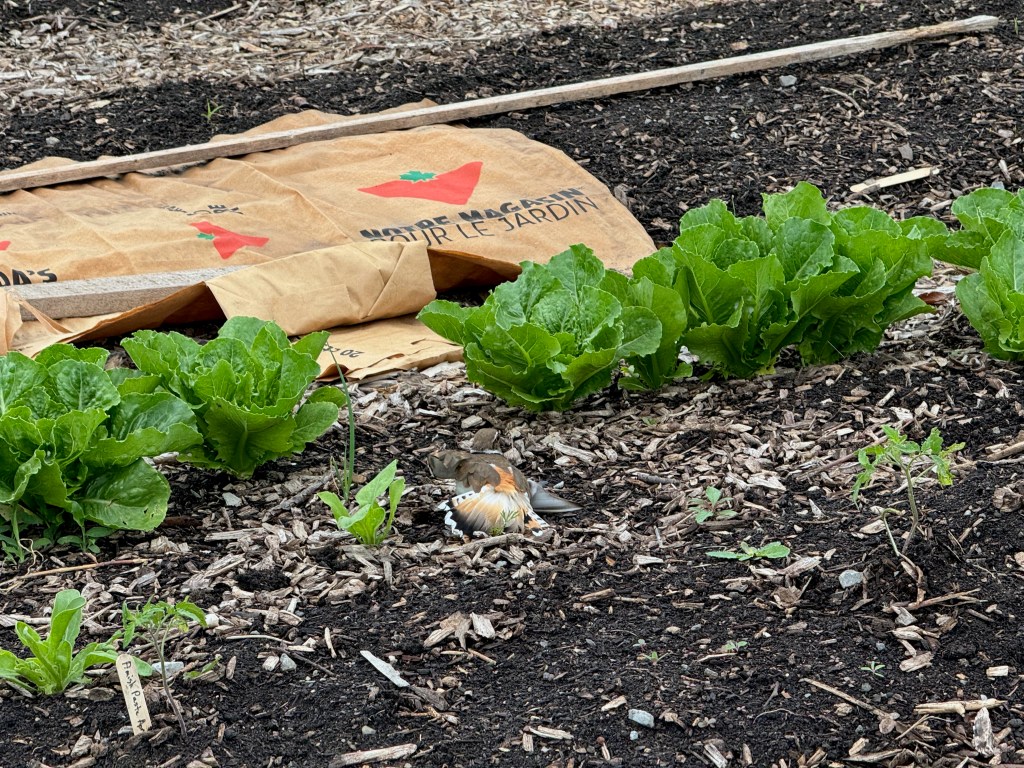
Killdeer nest open areas so they can spot predators from a distance. If a predator approaches (that includes us humans), they quietly run from nest and once they’re far enough away make a lot of noise. If the predator continues to approach, depending on the perceived threat, they use different distraction techniques, the most famous of which is “Broken Wing” or “Injury-Feigning Display.” They feign a broken wing and, as you approach, they move further away and repeat the process.
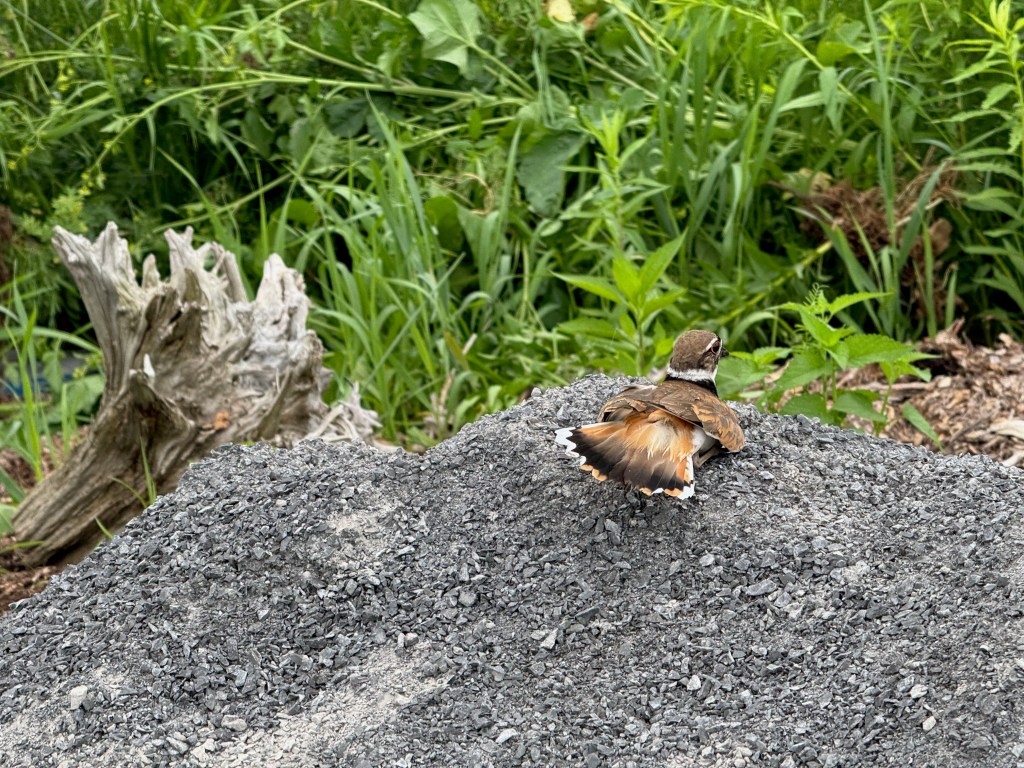
Since we humans are more often seen by Killdeers as blundering ungulates who may inadvertently step on a nest, another distraction technique I’ve experienced at Lakeside is “Ungulate Display” where they rush towards the threat with a lowered head, raised tail features and spread wings while giving constant short, high-pitched deet sounds.
Drinking and bathing
We need puddles! I read that Killdeers often bathe after feeding. While water does pool in low spots after a rain, watching this video makes me think we need a more consistent water supply.
Migrating
Killdeers are short-distant migrants who arrive in our area early to mid March and depart starting in August until early October in flocks of 6-30 birds. You can track their migration using Audubon’s migration explorer.
References
- Killdeer, CornellLab All About Birds
- Hinterland Who’s Who
- Sexual and agonistic behaviour in the killdeer (Charadrius vociferus), R.E. Phillips
- Killdeer: a true tale of nests, eggs, and chicks a-hatching, Robert Groos Photography
- Bird meets bulldozer, Glenn, Caryl, girls and cowhands from Alderspring
 Lakeside Community Garden