“In cities, we tend to think of wildlife, if at all, in terms of pest control. But what if we thought about wildlife in terms of conservation? What kinds of habitats do we want to create, and what kinds of creatures do we want to surround ourselves with? To do that, we need to think about reorienting pest control toward habitat management.”
Peter Alagona, The Accidental Ecosystem
We don’t have a rodent problem at Lakeside, perhaps due to the owls and hawks who make their home in the small forest patch in the middle of Collins Bay Prison farm. However, we do have a variety of rodents who call Lakeside home, including Meadow Voles, Meadow Jumping Mice, Deer Mice, moles, chipmunks, squirrels and other rodents we have yet to identify. We’re happy to share Lakeside with rodents as they’re essential for healthy ecosystems.
Healthy ecosystems need rodents
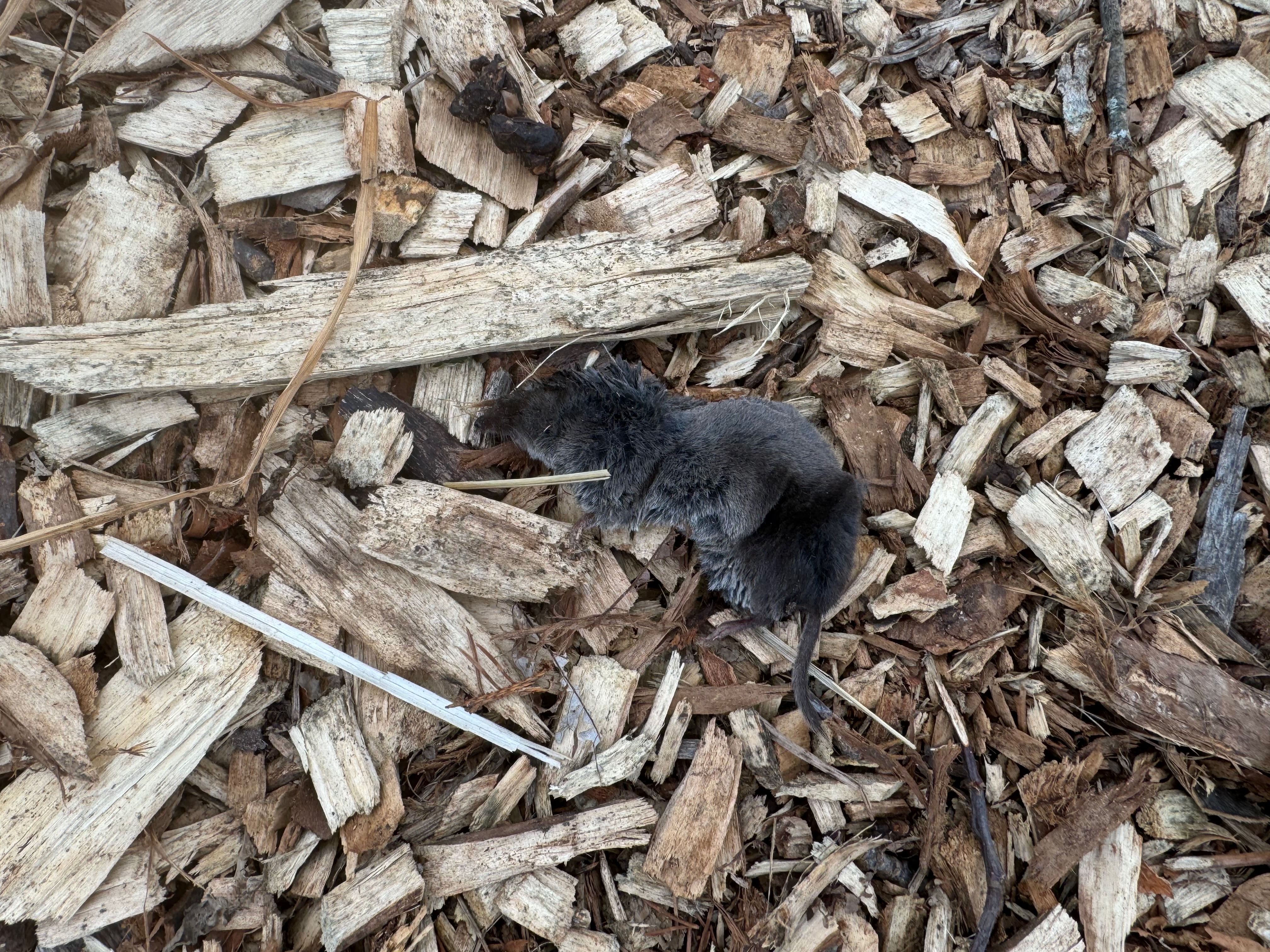
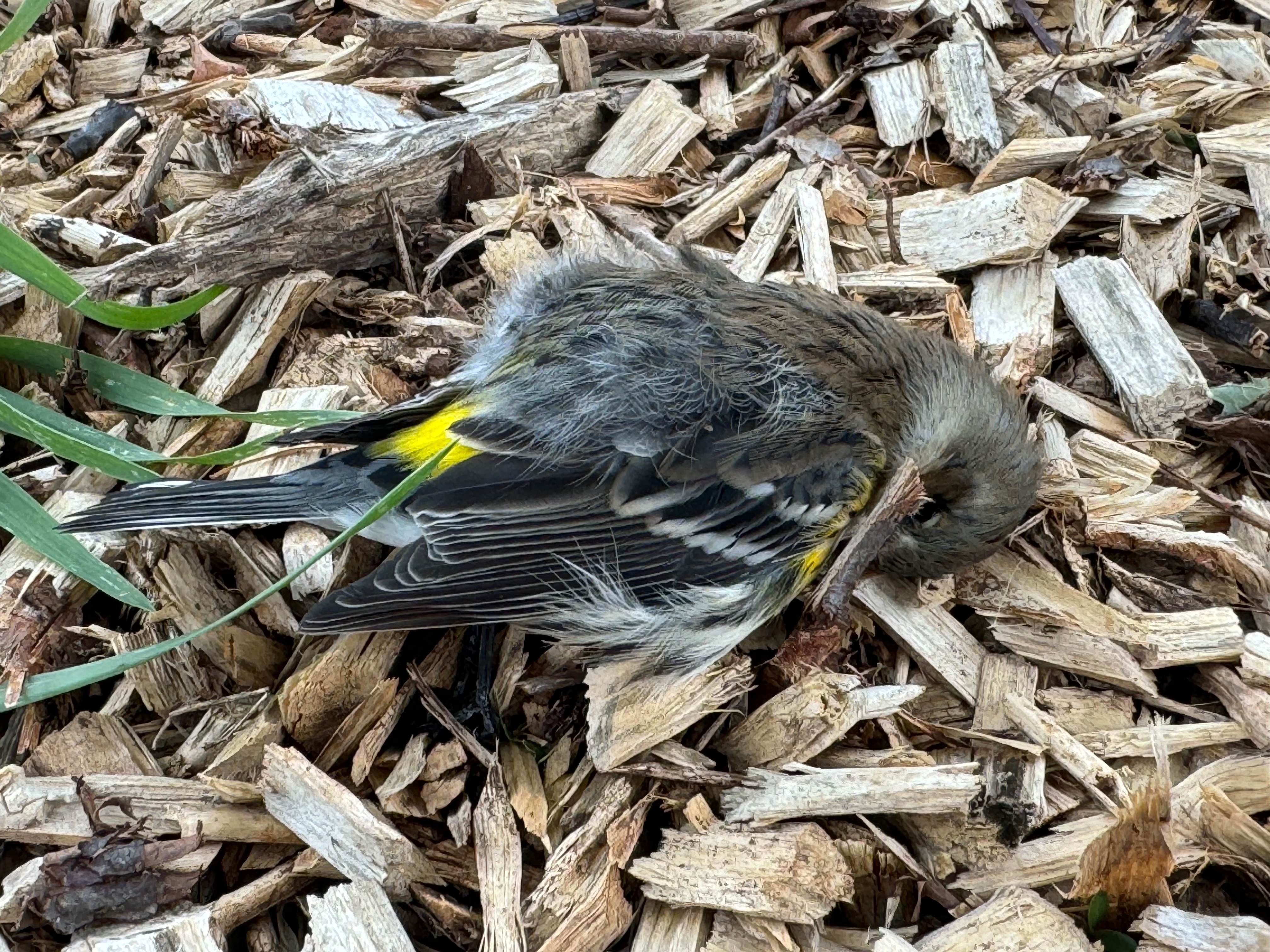
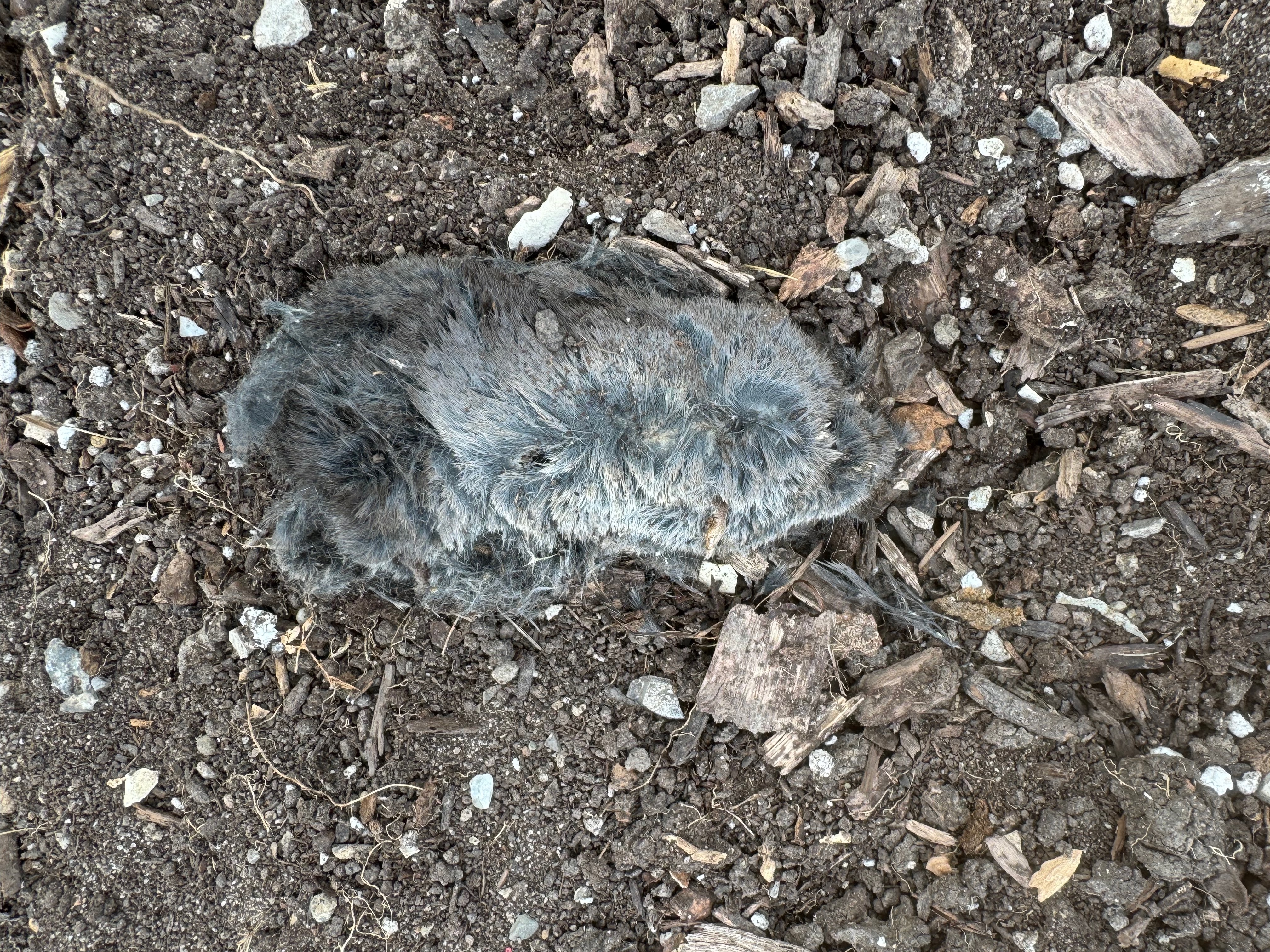
While we don’t have a rodent problem, we do have a rodenticide problem. In 2024, the city installed rodent bait stations at the Sharing Centre and Centre 70, which we discovered after finding numerous dead voles, shrews, a Robin and several Goldfinches. While shrews are predators who don’t consume bait, one theory is that they consumed poisoned slugs or snails or carrion of voles who had consumed bait.
Rodenticide kills slowly and then makes its way up the food chain as the dead animals are consumed by insects, foxes, dogs, birds of prey and other wildlife. Rather than using rodenticide, we’re hoping Kingston follows the lead of Pickering and Clarington who banned the use of rodenticides in city facilities.
Raptors keep rodent populations in balance
Farmers are increasingly looking to birds of prey as an alternative to rodenticides. The city is willing to trial an alternative to rodenticide, which means we can install nest boxes without fear of poisoning the birds of prey we’re hoping to attract. We’ll install nest boxes for American Kestrels and Eastern Screech Owls, both of whom are comfortable nesting in urban areas.
American Kestrel: the day shift
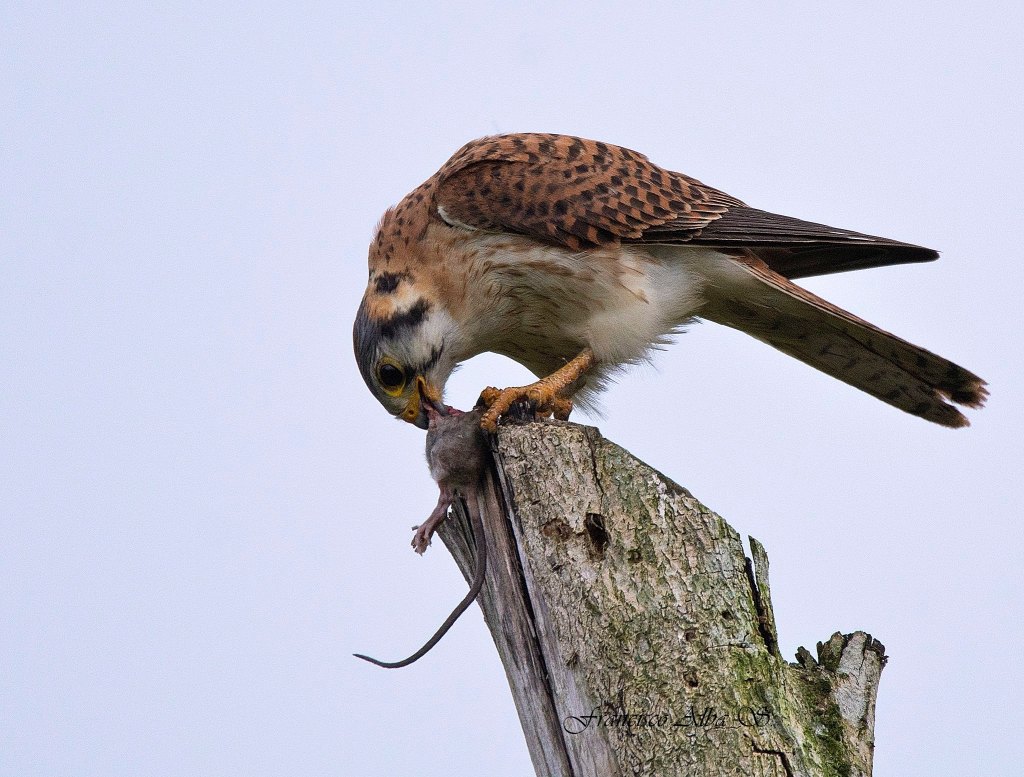
Kestrels hunt during the day, consuming primarily invertebrates (grasshoppers, cicadas, beetles, dragonflies, butterflies, moths and spiders) as well as Voles, Mice, Shrews worms, reptiles and occasionally songbirds.
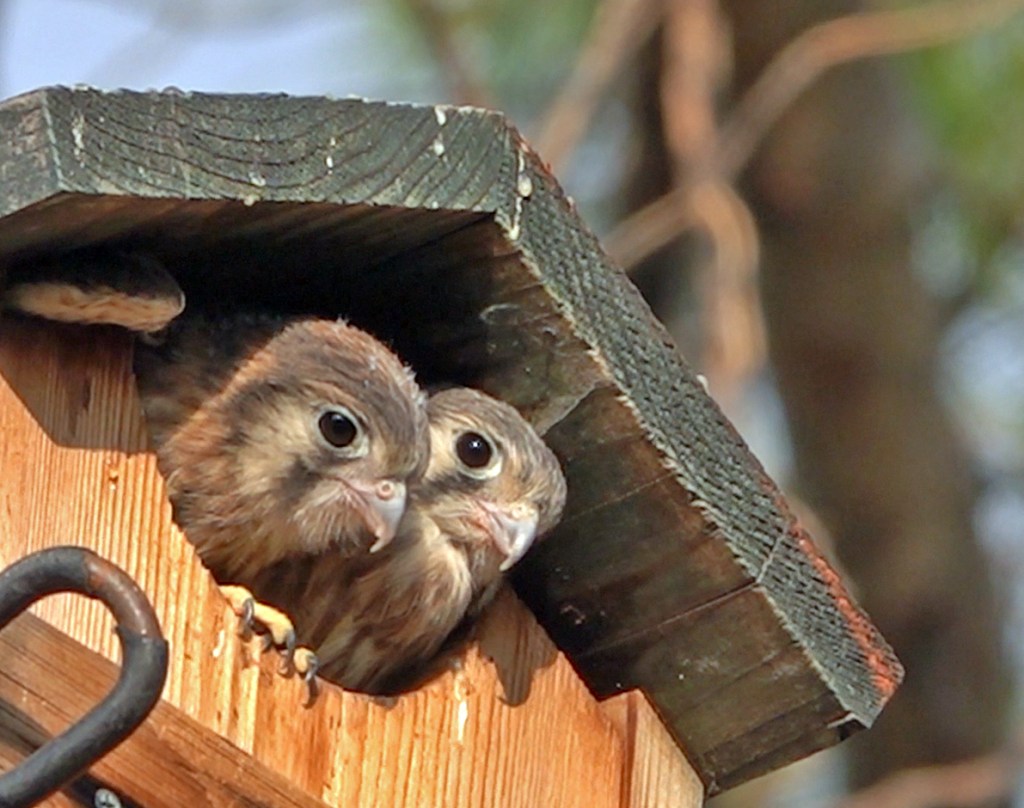
Kestrels need a wide open approach and unobstructed view of the nest box (they stand guard from a nearby tree or power line). Since chicks may leave the nest before they can fly, we’ll locate the box near shrubby cover where the chicks can shelter. They usually lay four or five eggs. Here’s how we’ll install the box: 5-.75cm wood chips. Height 3-9m. East or south facing. Spacing 800m and 300-500m from high human disturbance.
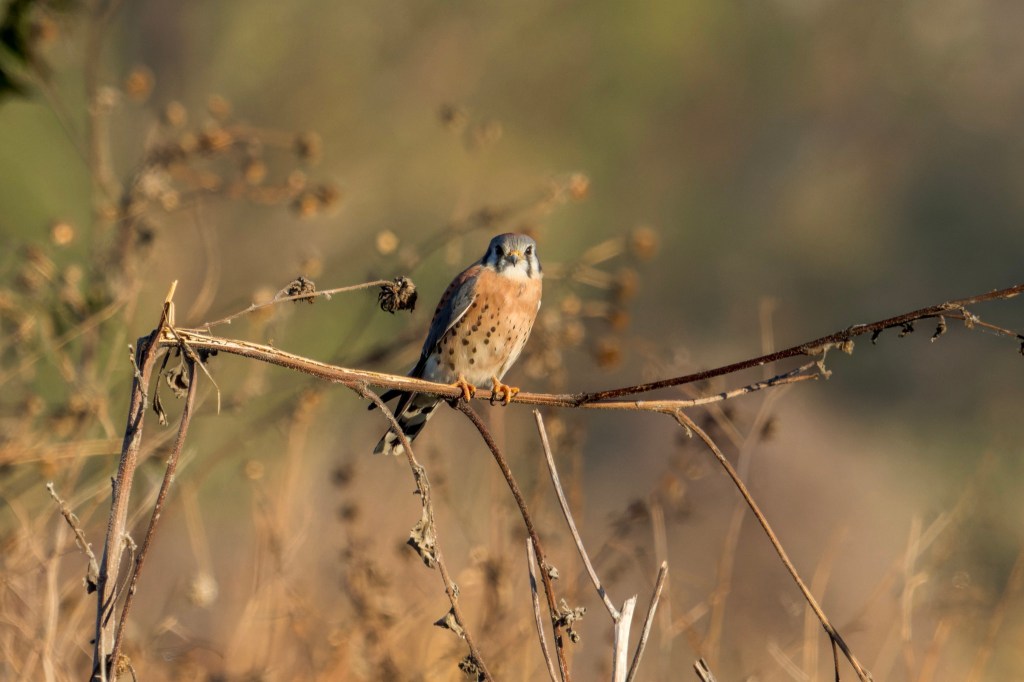
Boxes may also attract Screech Owls, Northern Flickers and other songbirds. Need monitoring for Starlings. Once they find a safe nesting site, Kestrels will return each year. While a few Kestrels overwinter in the Kingston area, the majority migrate to the southern United States or Central America.
Eastern Screech Owl: the night shift
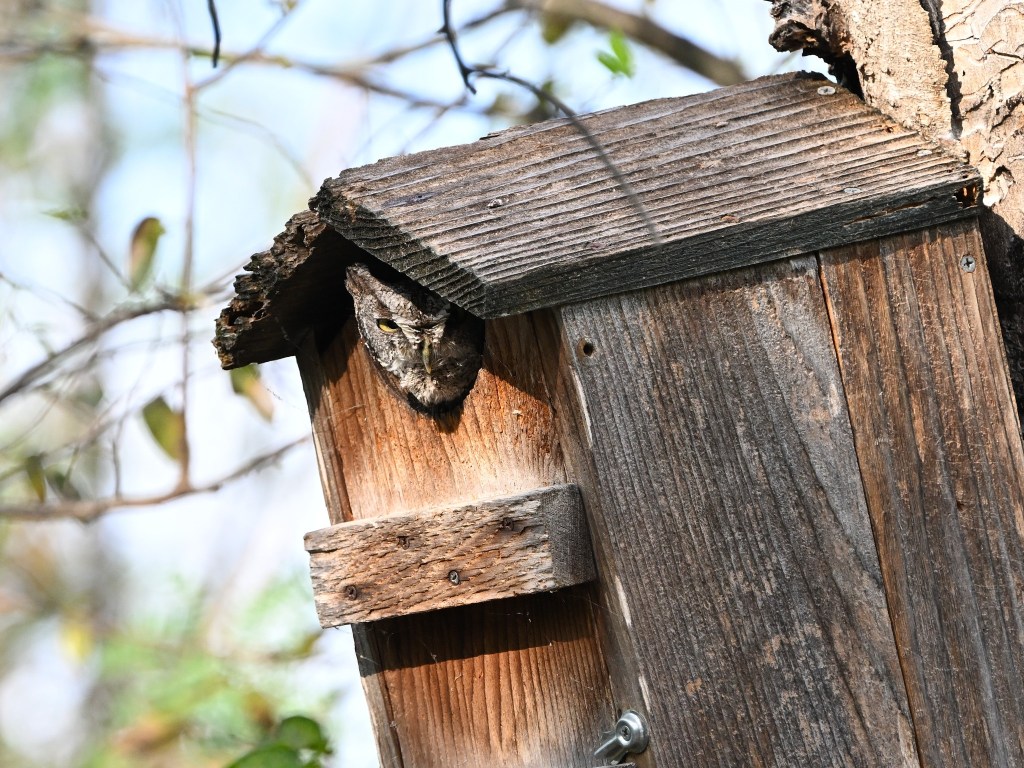
Eastern Screech Owls are night hunters, consuming both terrestrial and aquatic invertebrates and vertebrates, including moths, bats, tadpoles, earthworms, songbirds, moles, voles, mice and songbirds.
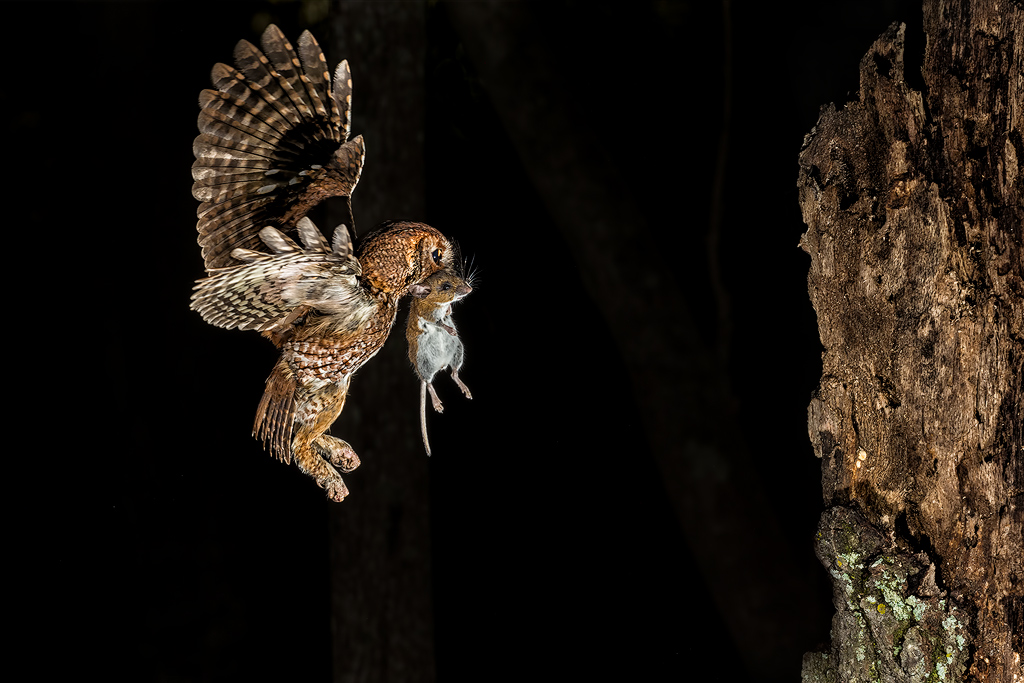
Visit Ed Erkes Photography to see a few of the amazing photos he captured over six nights while he watched a Screech Owl deliver insects, insect larvae, fish, crayfish, tadpoles, frogs and mice to their chicks.
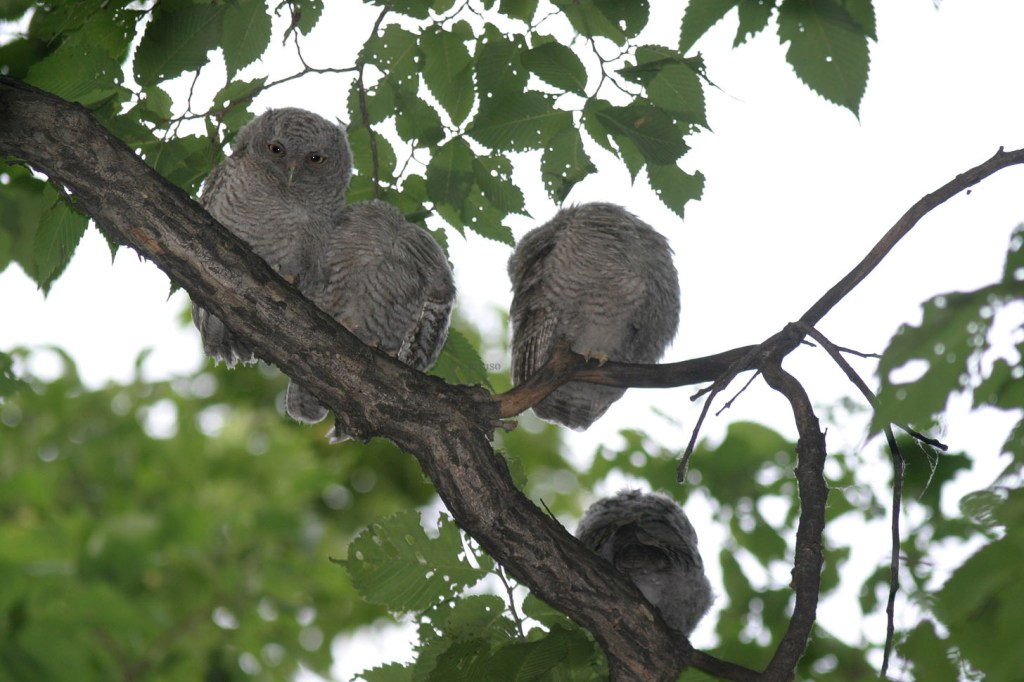
Eastern Screech Owls nest between March and June and usually lay 3 to 5 eggs. Here’s how we’ll install the box: Woodland edge. 5-7cm of wood chips. Height 3.7-4.6m. Facing east or south. Spacing 30m. Close to a branch for young to climb on.

Can you spot the snow? Eastern Screech Owls are year-round residents who will also roost in nest boxes over the winter.
References
- Effectiveness of vole control by owls in apple orchards, Chie Murano
- Got voles? Predators are your best ally, so make them welcome with nest boxes, Anthony and Carol Boutard
- American Kestrel Nest Box Guidelines, Mitchell Warne
- Kestrel nest box occupancy and fledging rates and the effect of kestrel presence and absence on bird abundance and activity in fruiting crops in the Niagara Region and Norfolk County, Mary Jasinski
- CornellLab NestWatch
- Rate poison’s long reach, Dina Fine Maron
- In defence of rodents – why healthy ecosystems need them, Abi Gazzard, Connor Panter and Rosalind Kennerley
 Lakeside Community Garden