by John S. Poland
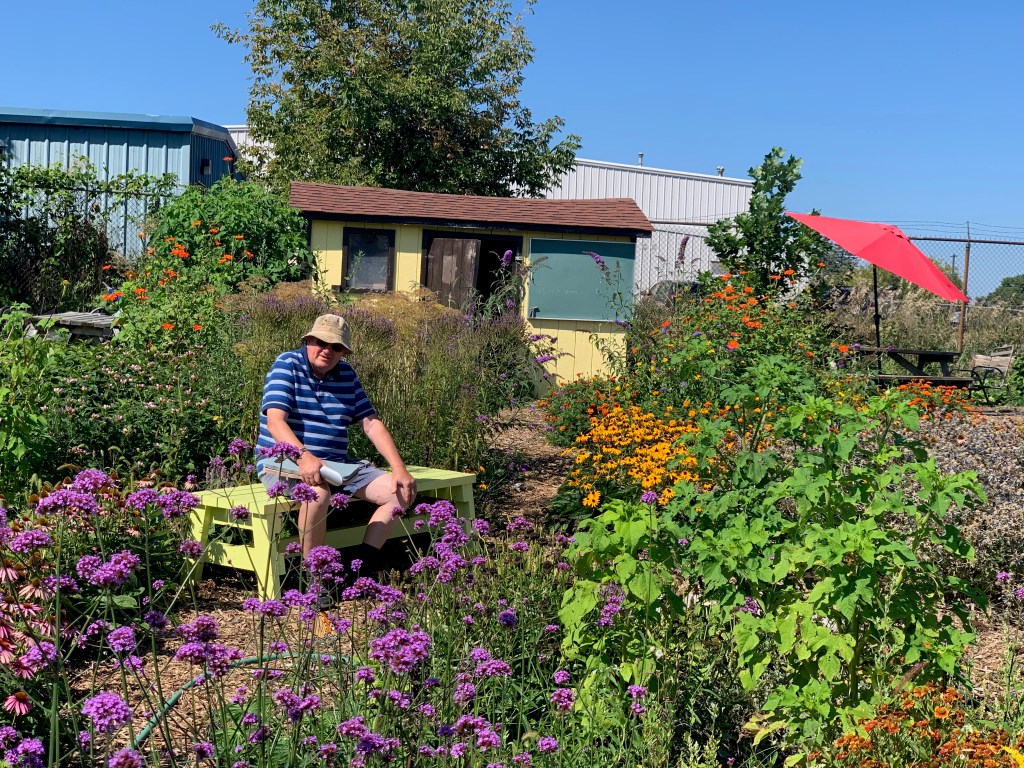
The Lakeside Community Garden was established in 2013 on a portion of the Collins Bay prison farm that is leased by the City of Kingston from the federal government. It’s just at the top of Bishop Street where I live so when I learned this I asked the board whether they would like to have a butterfly garden there. As it happens they had proposed one but no one on the board knew what they were getting into. Thus I was received with much enthusiasm. I submitted a plan and went off to Australia. By the time I returned the Butterfly garden plan was approved, though not in its original location.
Early April, 2014, I went on site with string and tape measure to establish the boundaries and the paths in and around the garden. The size of the garden is 98 ft by 30 ft. Paths were constructed by placing cardboard obtained from various merchants according to the plan and covered with woodchips supplied by Ontario Hydro (both for free).
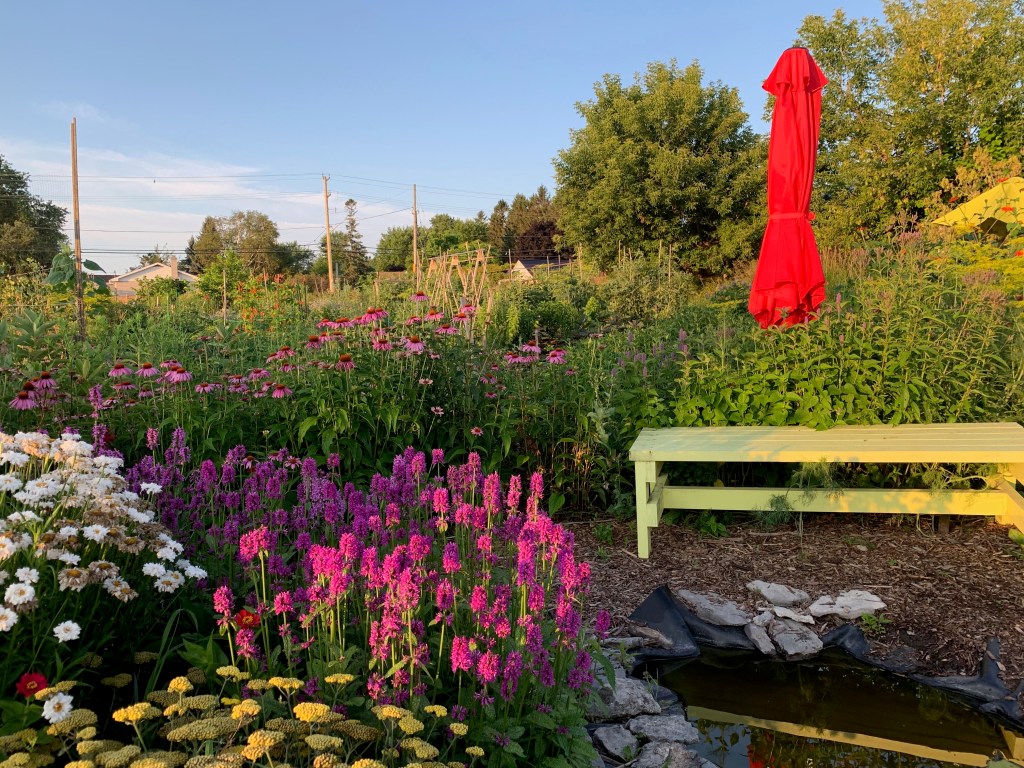
A small pond was added by digging out a suitably size depression, placing an old carpet in it and adding a thick plastic pond liner that I had inherited from a project at Queens University. Little or no soil amelioration was done in the first 2 or 3 years and no dig gardening was the order of the day. More recently compost and manure have been added which has greatly helped in weed control.
Let me now to talk about butterflies. A butterfly goes through an amazing cycle in which a female butterfly is fertilised by a male butterfly, she lays eggs on the leaf of a plant, the egg hatches and a tiny caterpillar emerges, which eats the leaves of that plant, it then turns into a chrysalis from which emerges the adult butterfly which then consumes nectar from various flowers before repeating the whole cycle. This cycle may happen only once a year or several times depending on the species. Thus there are two food sources required for the cycle to function, namely the food source (host plant) for the caterpillar and one to provide nectar for the adult butterfly. Adult butterflies are not particularly fussy about which flower they get their nectar from though several are preferred. One the other hand, the caterpillars require a specific plant or sometimes a genus of plants. Therefore, in designing a butterfly garden one has to supply the needs of both.
My initial plan was to divide the garden in two sections corresponding to these two needs. I had quite a number of large perennial plants in my home garden so I subdivided them to provide the basis for the nectar garden which was supplemented by annual flowers grown from seed. I purchased a supply of Ontario meadow flower seeds for the caterpillar food source area. This was not a good idea as it quickly became a weed bed and some of the weeds, which were, in fact, desirable caterpillar food, were weeded out by well meaning members of the community garden. After some experimentation, the garden is now planted with a mixture of both caterpillar and adult butterfly food needs. It’s a good idea to have a good clump of each plant variety, like one or two square meters, in order to attract Lepidoptera.
Nectar plants

In terms of nectar sources, my preferred flowers are the perennials:
- Butterfly Bush
- Sea Holly
- Butterfly Weed

And the annuals:
- Mexican sunflowers
- Zinnias
The Kingston climate is not great for establishing butterfly bush (Buddleia davidii) as the winters are often too severe. They can, however, survive if planted close to a house. My experience in an open garden is a survival rate of about 20%. I grow them each year from seed which I have collected the previous fall when the seeds are well formed and have experienced some frost. By sowing the seeds in February or March, good sized plants, about a meter tall, can be obtained by September. Butterfly weed (Asclepias tuberosa) can take some time to establish and is very late to reappear in the spring so weeding around it requires care.
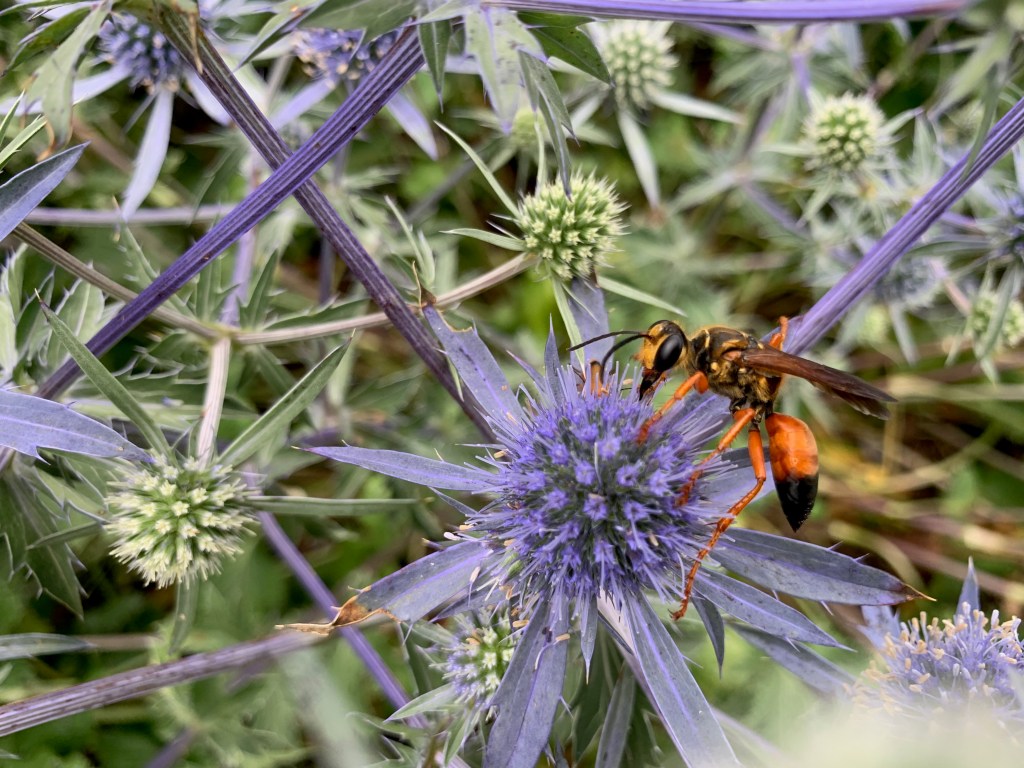
Sea holly (Eryngium) is good for late June and July and is a great attractor of pollinators. Mexican sunflowers (Tithonia torchlight, Mr Fothergill’s seeds) start flowering in August if sown in mid March and reach a height of 6 ft. Zinnias are great attracters for butterflies, and can vary in height from 6 in to 3 ft. They can be prone to damping off so it’s best to keep them somewhat dry and water in the morning. Verbena Bonariensis is a good addition as it grows taller as the season progresses and is showy above other plants. Asters and goldenrod are also good for attracting late season butterflies.
Host plants
There are nearly 100 butterfly species recorded for the Kingston region, the 50 km circle around city hall. However, only about 40 have been found in the city. At Lakeside the number are further limited by the lack of shade, the clay soil and host plants. One of the real challenges was to grow host plants at the site which was less than ideal for the specific host plants; there were more than a few failures.
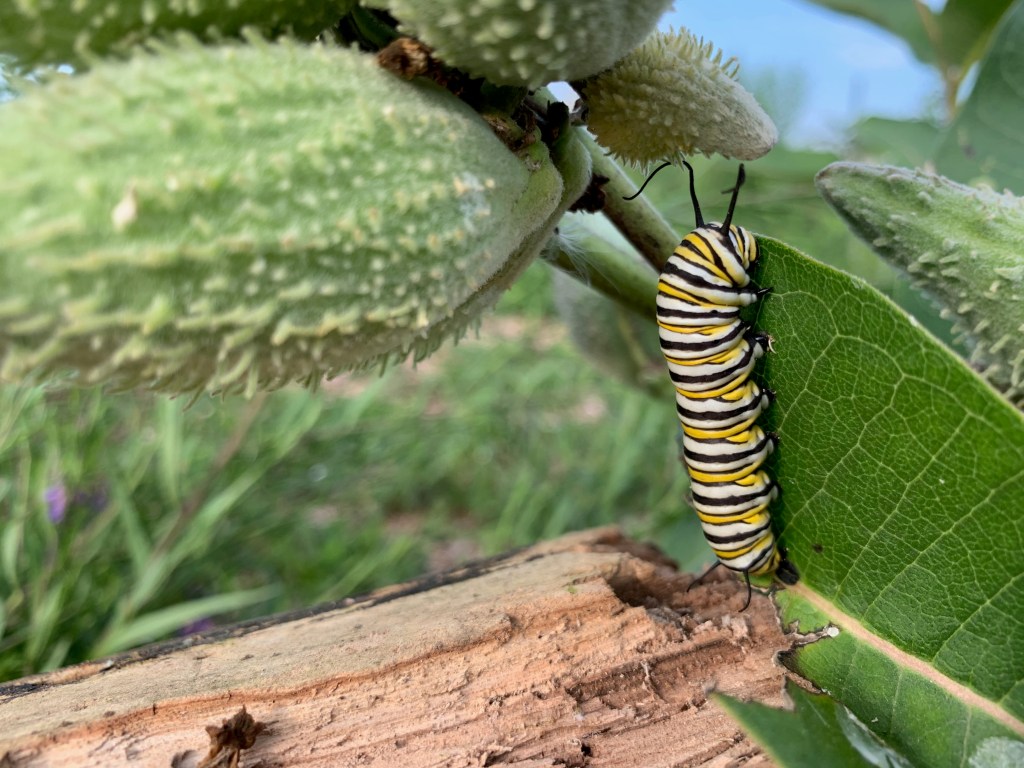
Milkweed (Ascieplas syriaca) is famous for attracting Monarchs and also provides a nectar source for some butterflies particularly hairstreaks. It spreads underground and needs to be contained by digging up and discarding the long feeder tap roots. Other milkweed species such as swamp milkweed need wetter shadier conditions than are available at the community garden.
The table lists the various food plants we grow in the garden along with the butterfly species that use them to provide nourishment for their caterpillars. Two hackberry trees were donated to the garden by the Lemoine Point nursery and eggs of the American Snout butterfly were found on it in 2019. Snouts are very rare visitors to eastern Ontario. There is an expression in the butterfly world “plant them and they will come” and in this case they did. The starred items are of the plants on which the corresponding butterflies have actually been observed laying eggs or their caterpillars seen, while the butterflies marked with a # have been observed in the garden.
Host Plants
| Host Plant | Butterfly |
| Milkweed* | Monarch # |
| Gas Plant (dictaminus alba) | Giant Swallowtail # |
| Rue*, dill*, fennel, and parsley* | Black Swallowtail |
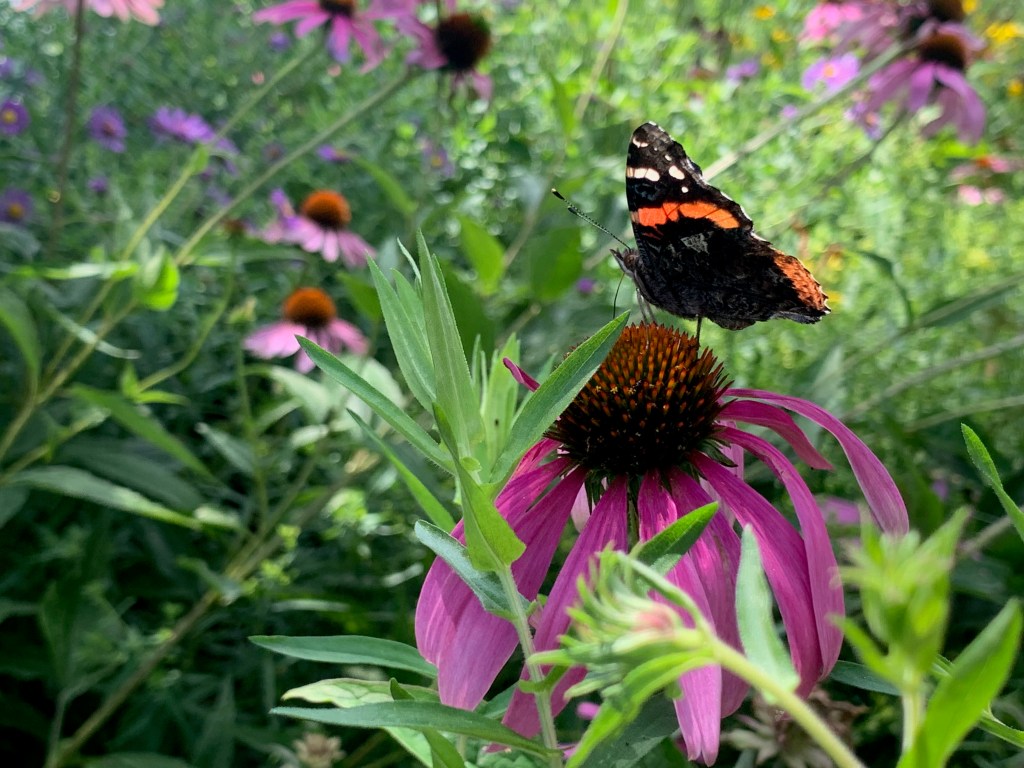
| Nettles* | Red Admiral # & Milbert’s Tortoiseshell # |
| Pussytoes (antennaria)* | American Lady # |
| False indigo * and Crown vetch * | Wild indigo Duskywing # |
| Hackberry tree * | American Snout # |
| Various clover species | Orange Sulphur #, Eastern Tailed & Silvery Blue # |
| Turtlehead (chelone) | Baltimore Checkerspot |
| Various Docks | American & Bronze copper # |
| Dogwood and Viburnums | Azures # |
| Columbine | Columbine Duskywing |
| Asters | Crescents # & American Lady # |
| Legumes | Clouded Sulphur # |
| Grasses and Sedges | Least, European and Dun Skippers # |
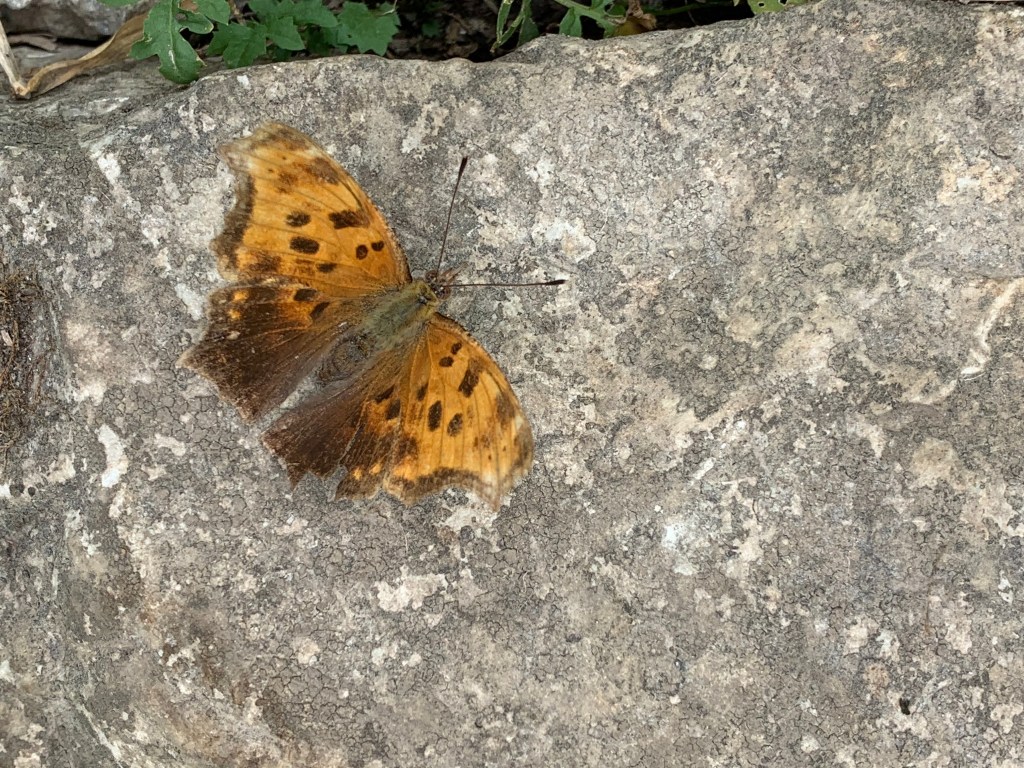
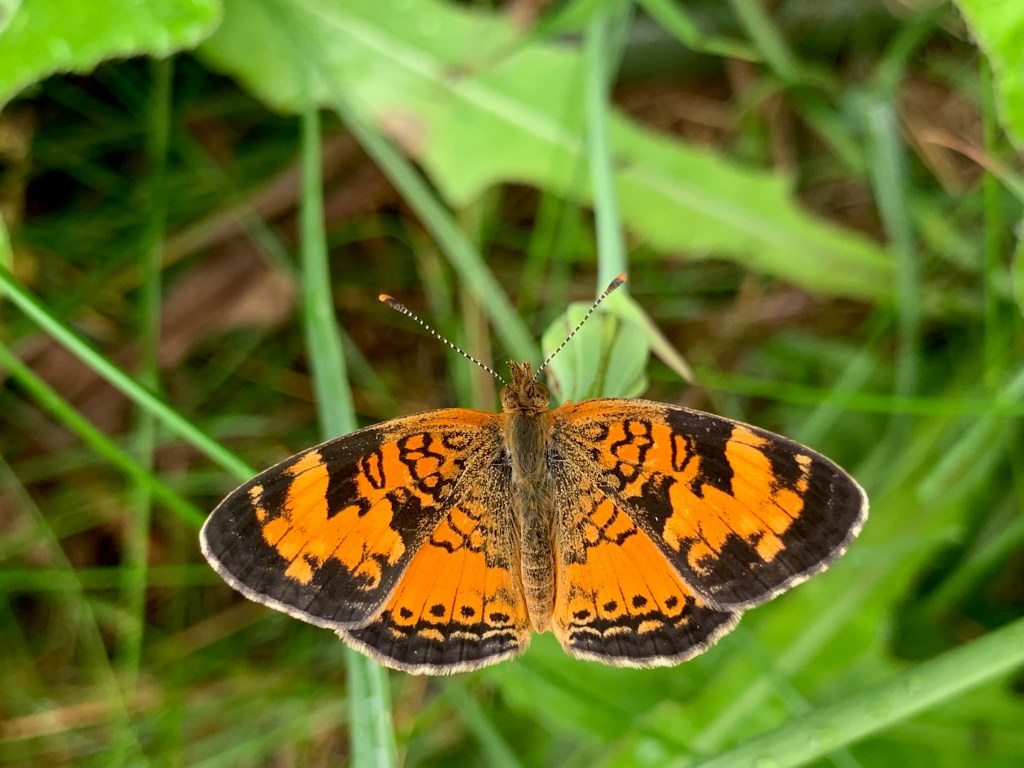
Other butterflies we’ve observed in the garden are Eastern Tiger Swallowtail, Mourning Cloak, Painted Lady, Viceroy, Questionmark, Eastern Comma, White Admiral, Milbert’s and Compton’s Tortoiseshell and Cabbage White.
Plants that we tried but failed to establish include sweetfern, blueberry, violets, toadflax, New Jersey tea and two-leaved toothwort.
The butterfly garden is maintained by Alexandra Simmons and John Poland.
 Lakeside Community Garden