
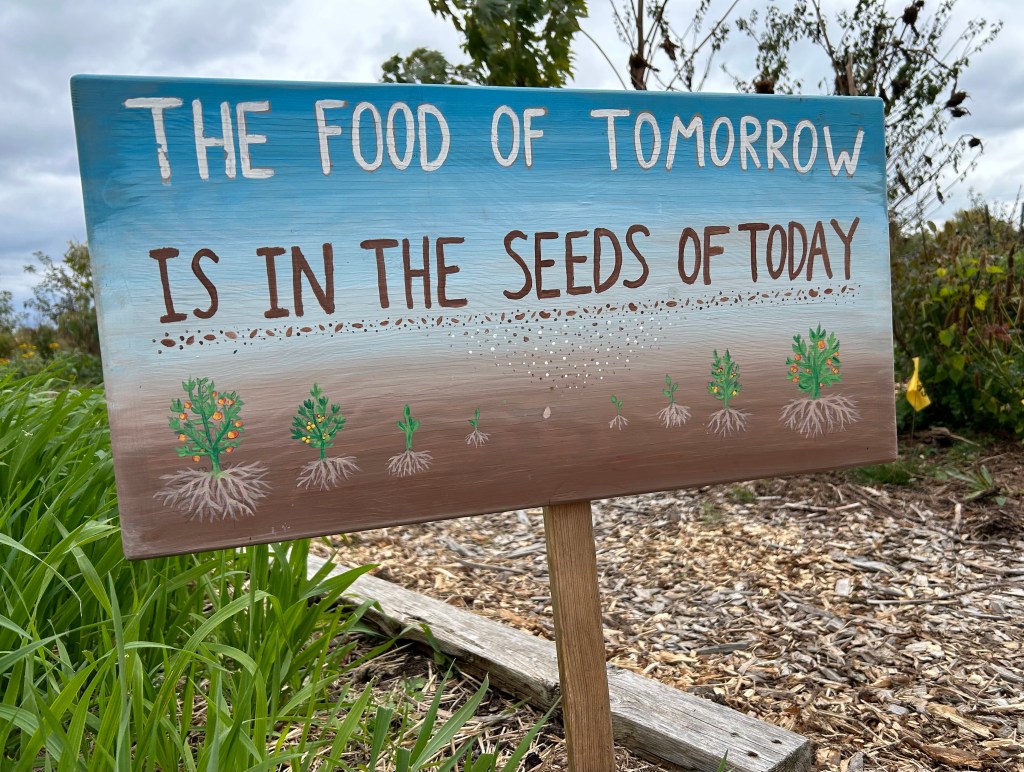
In a far corner of the Lakeside community garden is a patch of land set aside for the KASSI Seed Saving garden. Here, locally-adapted, open-pollinated (non hybrid, non genetically modified) seeds from the KASSI Living Seed Commons are grown out each year, ensuring a continuous supply of these varieties to share with the Kingston community.
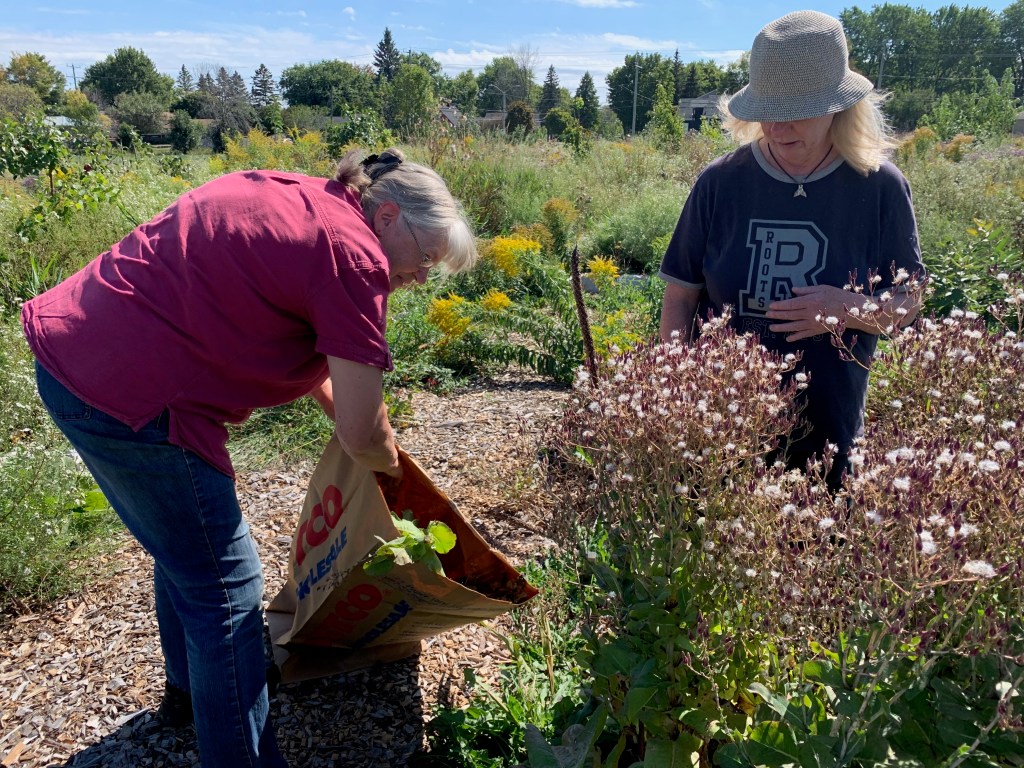
We talked to Cathy Christie, chair of KASSI, to find out more about her own journey to seed saving and the current activities of the organization. Her interest was first sparked over 30 years ago, when she began to learn about the large scale industrial control of crop seed production and loss of genetic diversity in the global seed supply. Attending a Seedy Saturday event and further conversations led to her roles with KASSI.
Food security starts with seed security
In the early days of agriculture, growers saved their own seeds to replant each spring and to share and trade with their neighbours. Settlers often brought their favourite seeds from home to ensure their food security in a new and unknown place.
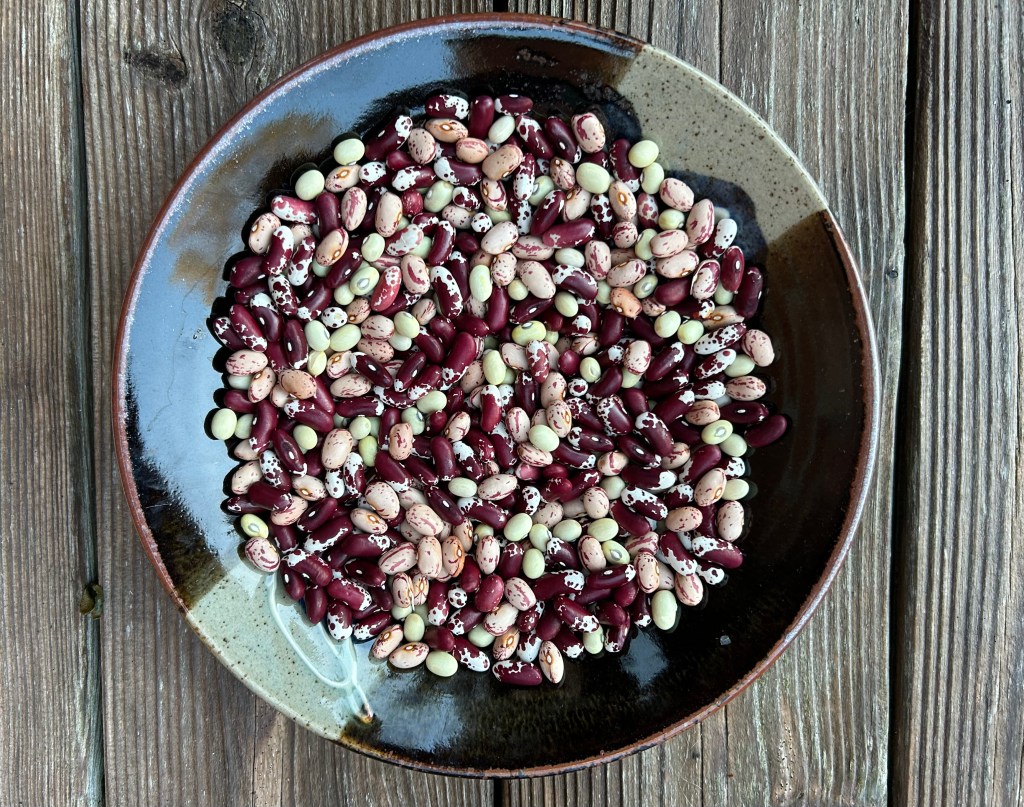
Over time it became possible to purchase seeds grown in far-flung places or that were hybridized to create new varieties. Thus an industry was born! But there are those that still save seeds – as a way to ensure they have their favourite kind on hand or as an inexpensive way fill up those garden plots. Or, as does KASSI, to steward different varieties of crops and the genetic diversity they hold that might otherwise be lost.
Genetic variation and plant adaptation
This variation is what allows plant species to adapt to the locale in which they are grown and to survive and thrive if perturbations in the environment occur. This can include changes in climate or emerging diseases and pests. With enough genetic variation in a population there will always be individual plants that can survive in changing and challenging conditions. To learn more, this article is a helpful introduction to biodiversity and food security.
KASSI is also growing landraces to increase the genetic variation of each crop. A landrace is a a variety of a plant (or animal) species that adapts over time to a local geographic region. It usually has greater genetic diversity than those produced by formal breeding practices.
Exploring the KASSI plots
Most of the seeds being produced here are the vegetable crops we love to eat – tomatoes, beans, lettuce, beets, leeks and more. Many are unusual or rare varieties not found in stores or seed catalogues that have been chosen because they are nutritious and/or store well. Although most are food crops, you’ll see calendula and cosmos as well.

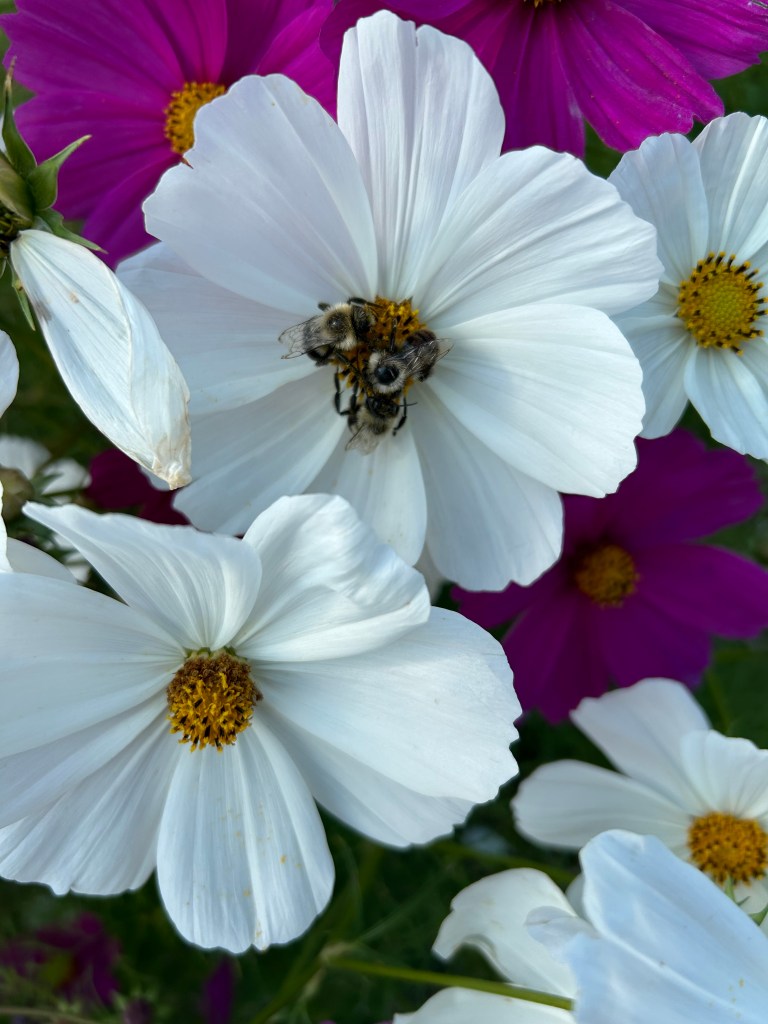
There are 23 beds each measuring 4 by 10 feet in the seed saving garden. Due to space limitations, the kinds of crops grown out at the Lakeside location are chosen because they are self-pollinated (as opposed to relying on insects or wind). They do not need to be separated by long “isolation” distances from similar plants to avoid cross-pollination. Typically a population size of 80-100 plants is grown to ensure the maintenance of genetic variability of each crop.
Many hands make light work
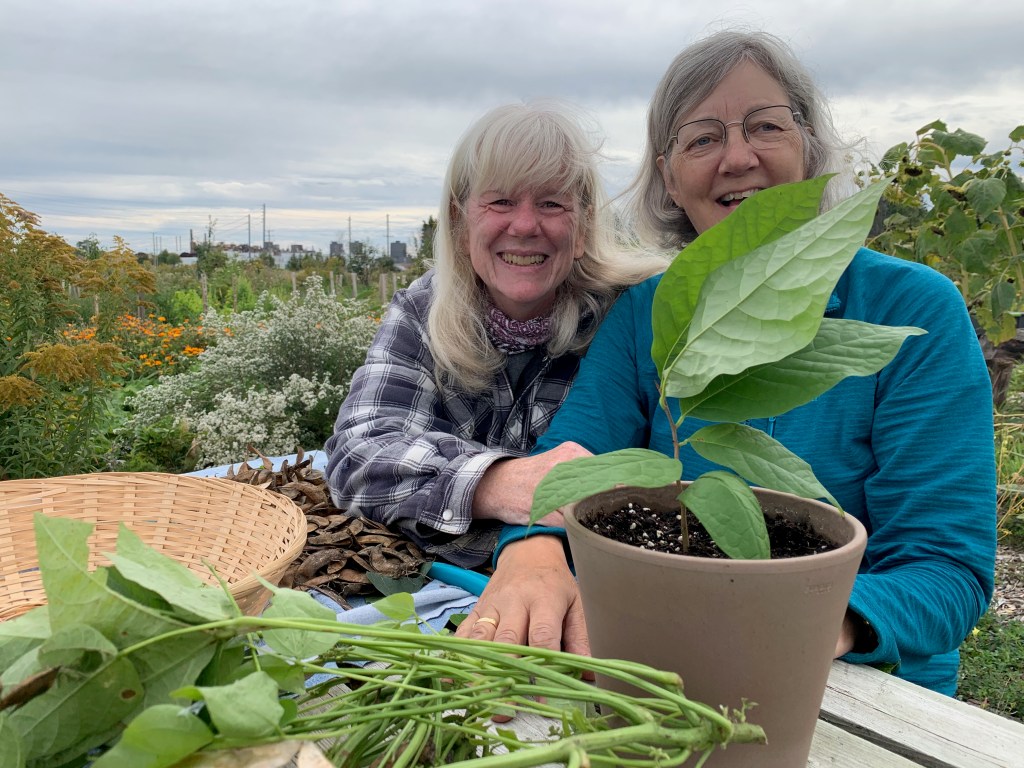
Each year a small group of volunteers known as seed guardians prepare the beds, sow the seeds, tend the plants over the summer months, and come fall, harvest seeds to add back to the collection. At the same time, sharing stories (and snacks) with fellow gardeners is a great learning experience.
How to get started as a seed saver
Seeds can be saved from many of the plants at Lakeside such as native flowers from the pollinator patch or from your own crops if you are growing open pollinated varieties. Seeds collected from hybrid varieties will not grow true to the parent plant or may not be viable.
It’s easy to get started. After all, plants have been doing this on their own for millennia. Stop by the KASSI plots and chat to the volunteers working there or attend one of the workshops held periodically at Lakeside. Kingston Seedy Saturday is always held on the second Saturday in March with a seed swap table and workshops.
There are numerous online resources as well. Start with a search of the local 1000 Islands Master Gardener website for informative and evidence based gardening articles including this one on planning a seed garden.
 Lakeside Community Garden