Seeds are living beings. When you buy seeds, you are not buying a thing. You are buying the services of the person who cared for, cleaned and packaged the seeds.
Cate Henderson, Kingston Area Seed System Initiative
Starting your own seeds is a wonderful, rewarding experience and allows you to grow an incredible variety of vegetables, flowers and herbs you can’t buy at the garden centre or grocery store. Learn how to buy seeds, make your own seed starting mix, successfully start seeds and how to care for them.
How to buy seeds
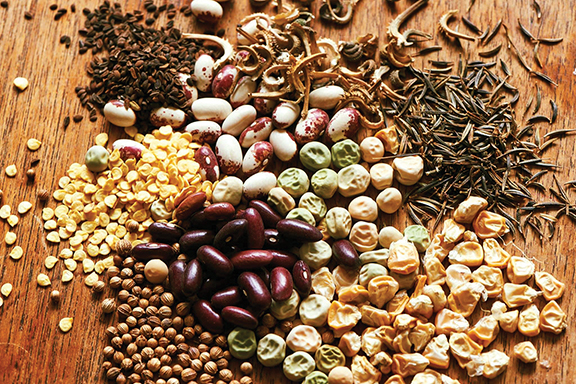
If possible, buy local seeds or buy from seed companies who lovingly grow, care for and package their own seeds. Most seed companies purchase their stock from overseas and then simply repackage them, which means they aren’t adapted to our local growing conditions. You can get locally adapted seeds from:
- KASSI (Kingston Area Seed System Initiative): Attend Seedy Saturday (first Saturday in March) for a seed exchange as well as those offered by local vendors. The day includes workshops and a Master Gardener advice clinic
- Bear Root Gardens: Bear Root Gardens believes that seeds are one of the most important elements in creating a sustainable food system. All seeds are grown and packaged on their farm near Verona, Ont. Catalogue on their website
- Kitchen Table Seed House: “We strongly believe that planting seeds is an act of hope, resistance and resilience. Growing plants, tending a garden and sharing food with neighbours and loved ones can be healing and is just one of the reasons we do this work and share these seeds.” Catalogue on their website.
If you want to explore a little farther afield, a listing of Canadian seed companies is maintained by Seeds of Diversity
What to look for on a seed packet
open pollinated or OP: Seeds from open pollinated plants grow like their parents. Pollen flows freely between plants. They retain their genetic diversity, adapt to changing growing conditions and are the foundation of our seed system.
hybrids or F1: hybrid seeds are created from open pollinated varieties. There are some great hybrid varieties, but their seeds are unstable and won’t grow like their parents. You must buy seeds each year to grow hybrids.
patented (PVP/UP/bag tag): A patent grants exclusive rights to the patent owner. Four multinational chemical companies control 60% of the seed market and they use patents to restrict seed saving and sharing in order to increase profits. It’s illegal to save patented seeds.
How to start seeds
- Purchase (or make your own) seed starting mixture. This should be light, hold moisture and drain well. Commercial potting mixes work well, as do seed starting mixes (particularly for smaller seeds)
- Wet the soil mix well
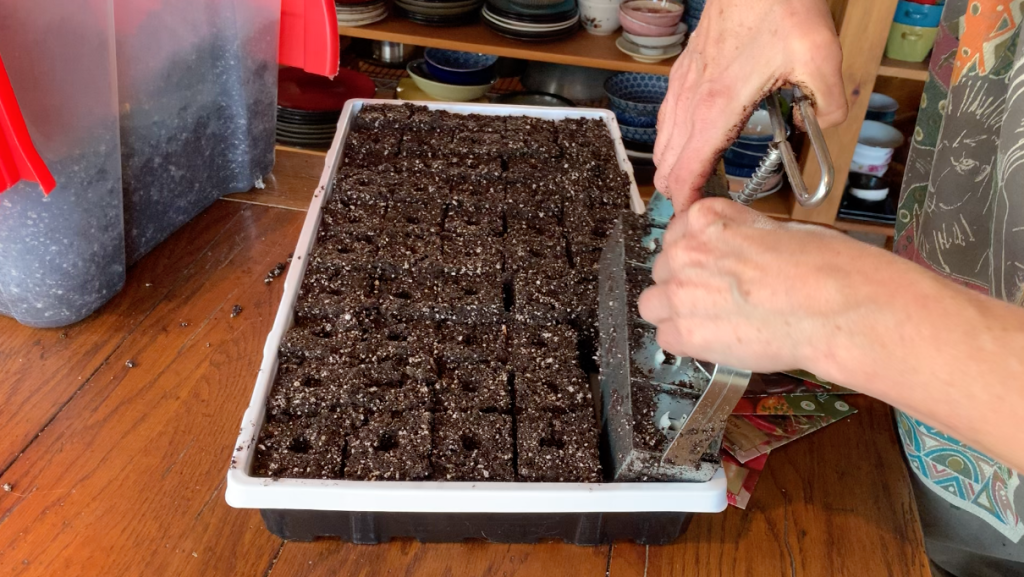
- Place small pots on a drip tray (an old baking sheet works well) and fill with potting soil. Seedling pots can be made from sustainably harvested peat or coconut coir (reusable), or items from around the house such as egg cartons. Or use a soil blocker that eliminates the need for pots. If you are using plastic pots, wash, sanitize and and re-use each year
- Plant seeds to the depth listed on the seed packet (good rule of thumb is twice as deep as the size of the seed), and cover with soil
- Label the pots (popsicle sticks make great labels!)
- Cover the tray (to retain moisture)
- Place the tray in a warm place in a sunny window
- Uncover the seedlings once they germinate
- Note that seeds started in the darkest shortest days of winter may need an additional light source to ensure proper growth
For more information of starting seeds, transplanting and more, this Grow your veggie garden guide from the Compost Council of Canada has a wealth of information for the beginner and pro gardener alike.

