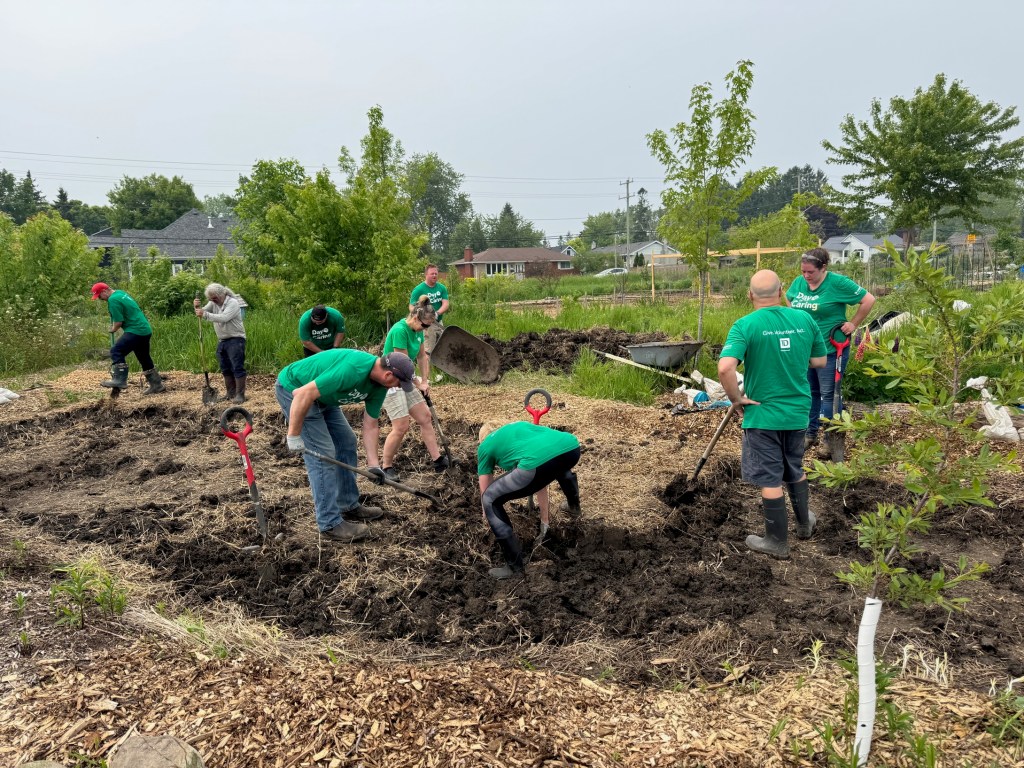
Meet Dragonfly Lair, Lakeside’s new hand dug vernal pond. Josh Cowan, who led the design and construction of the pond, trained in watershed restoration with Dr. Rajendra Singh, the Waterman of India. He calls vernal ponds — temporary wetlands that dry up in summer or fall — some of the most biodiverse and undervalued habitats in the urban landscape.
In a nest box overlooking Dragonfly Lair, for the first time we had Tree Swallows nesting at Lakeside. Robins bathe there every day. Goldfinches and Song Sparrows come by to drink and bathe. We’ve spotted Red-winged Blackbirds flipping leaves in the pond, looking for treats. And an unidentified swallow made several trips collecting mud.
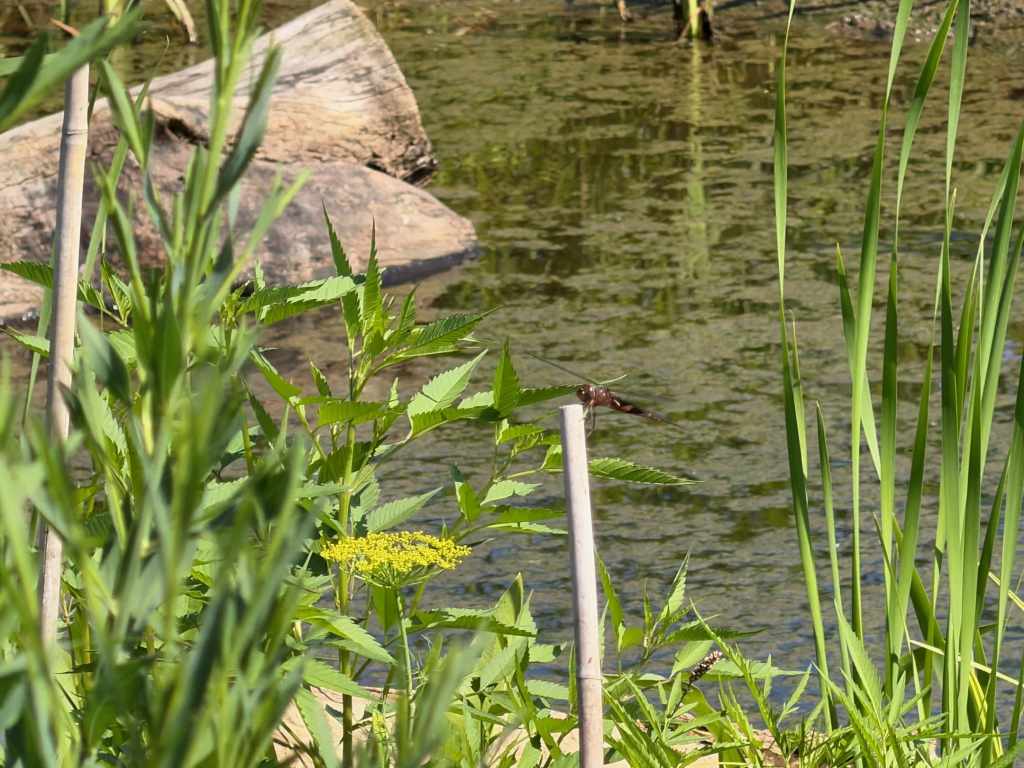
We’ve also had our first dragonfly visitors, though none yet have laid eggs, probably because they choose breeding locations based on emergent vegetation and we just planted our pond this spring. So far we’ve spotted widow skimmers, meadowhawks, and several large unidentified dragonflies hawking (flying back and forth over hunting for flies, moths, mosquitos, and flying ants).
Dragonfly Lair isn’t just for dragonflies. We’re hoping that as the pond matures toads, salamanders, and wood frogs begin using the pond for their nursery.
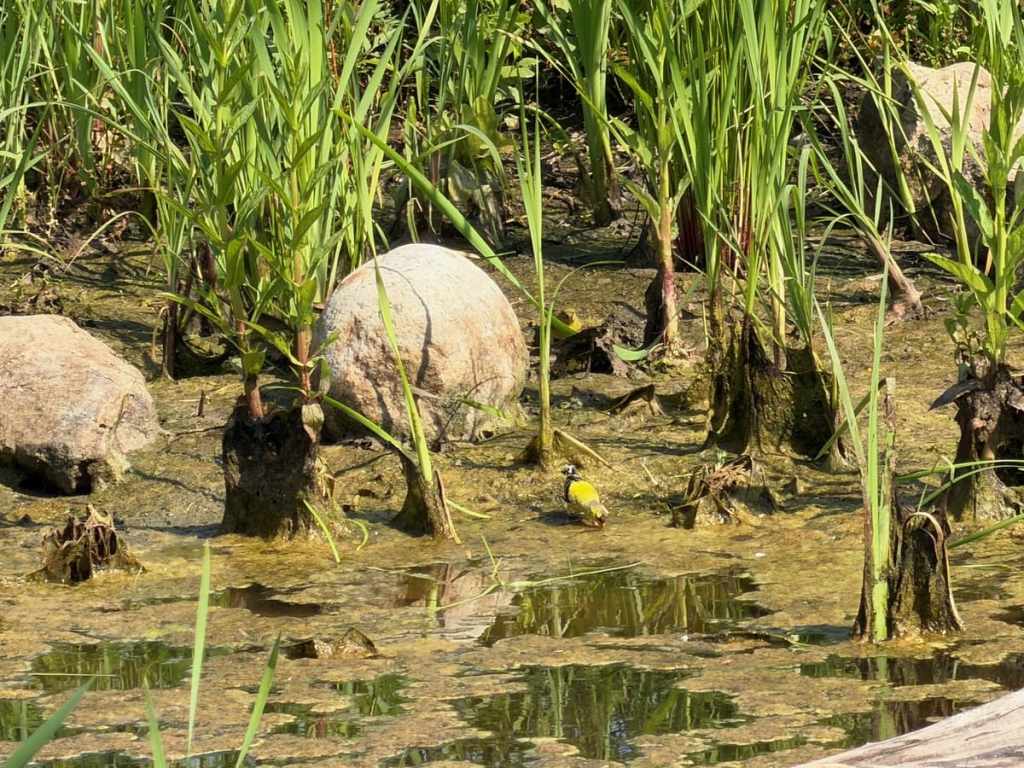
Can you spot the Goldfinches? There was a flock of about six eating Algae at the edge of the Lair.
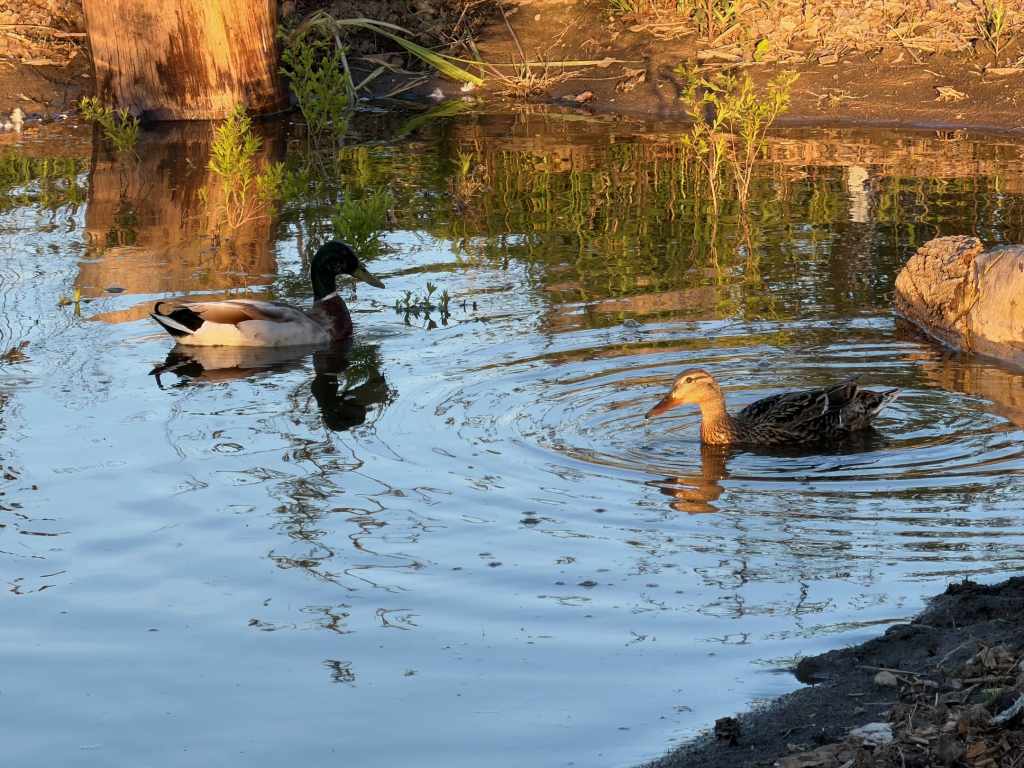
Algae is normal in new ponds. Eventually daphnia — crustaceans smaller than a comma — move in and eat the Algae. Daphnia’s resting eggs arrive on waterfowl feathers, in droppings, on the legs of aquatic insects, or by wind. Perhaps they hitched a ride on this pair of Mallards.
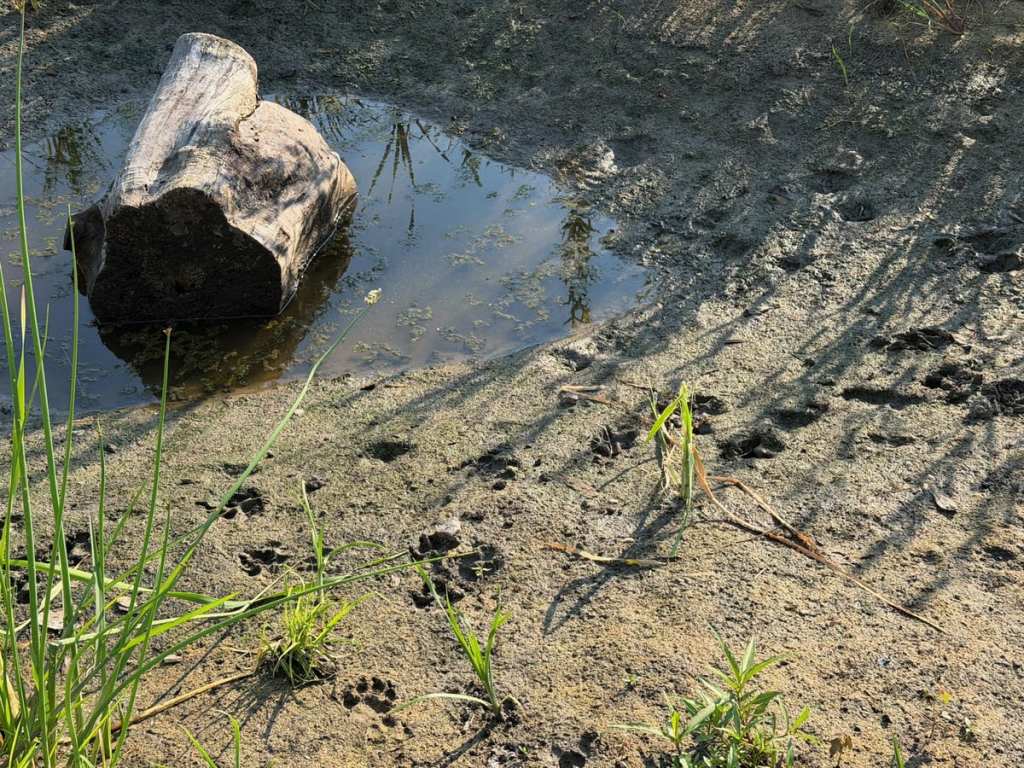
We’ll be tracking some of Dragonfly Lair’s visitors and residents on our iNaturalist project page. If you visit Dragonfly Lair, upload some of your observations.
No pond is an island. For dragonflies, damselflies, and toads, an ecological corridor means a network of ponds — a pondscape — across Kingston. The richer the network, the richer the life in each pond.

